Their names are Enes and Remzija.
Before I tell you about them, I need to explain the world in which I met them.
This summer has been wonderful. Sometimes I wish I could draw, or film everything I see. Then I remember I have a blog.
Like many of my posts, this one began as scraps of paper folded into my backpack, WhatsApp messages typed from borrowed phones whenever a thought appeared, and notes scribbled onto napkins before they disappeared again. Somewhere between mountain roads, evening coffee, and family dinners, I realized they were all trying to answer the same two questions.
Who do we become when history tells us who we should be? And what do we do when the stories we’ve inherited collide with the people standing in front of us?
I arrived in Bosnia expecting to spend another summer borrowing my family’s memories.
Instead, I came home with my own.
Some of them were difficult. Others reminded me why this country continues to surprise me every time I visit. Together, they taught me that history doesn’t only live in museums or history books. It quietly follows people through ordinary life
…Like in the sound of church bells.
I stood in a village near Travnik as the church bells echoed across the valley. They weren’t loud or dramatic. They simply marked the usual noon prayers, the way they always had. A little while later, from the opposite hillside, came the hođa calling to prayer from the mosque. It rose over the fields at almost exactly the same volume, lingering in the warm summer air before slowly fading away. Neither sound interrupted the other. They simply shared the valley together.
As I stood listening, I looked toward the road and remembered that some of the street signs had been scratched over.
Bosnia uses both the Latin and Cyrillic alphabets, road signs display place names in both scripts. In some areas, people have intentionally scratched out the script associated with another ethnic group. The signs still tell you where you’re going, but they also quietly announce who the majority is in that part of the country. Even something as ordinary as a road sign becomes a way of marking identity.
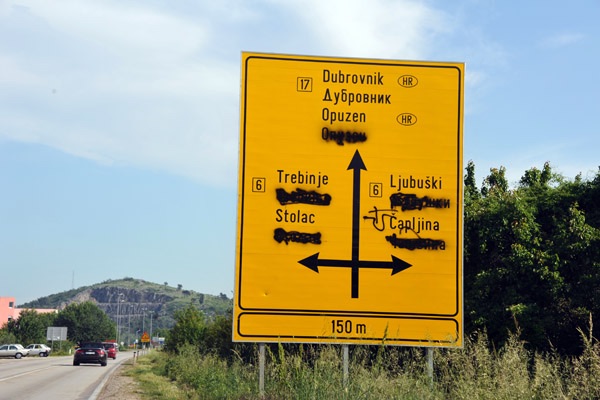
Yet I couldn’t help but notice the irony. People may scratch away the alphabet, but they cannot scratch away sound. The church bells still reach the mosque, and the hođa’s call to prayer still reaches the church. The valley carries them both, whether anyone wants it to or not.
…Until we arrived at the church.
During our road trip to Sarajevo my dad suggested we attend the evening Mass. Before anyone walked through the church doors, a gentleman politely asked who we were and whether we were attending the service. Just beyond him stood three police officers outside the entrance.
My dad later explained that, ideally, these groups are often made up of one Croat, one Serb, and one Bosniak officer. There is no law requiring this to be the case, but it reflects an effort to balance representation within public institutions in a country still shaped by its recent past.
Standing there, I found it difficult to wrap my head around. Before entering a place of worship, people first passed police officers and quietly explained that they were there to attend Mass. Instead of thinking about the service, I found myself thinking about why the police officers, and why their ethnic composition was something worth discussing.
As families, children, and elderly couples slowly filled the church, I realized how political ordinary moments can become. Something as simple as attending Mass carried reminders of a history that still asks people to think about ethnicity before they are simply allowed to be neighbours, worshippers, or citizens.
Over the next few days, I kept noticing moments like this. History seemed to quietly accompany even the most ordinary parts of everyday life.
…Like at the annual summer dance festival.
One evening in Travnik, I witnessed something that gave me a very different perspective.
The streets were filled with music as people gathered for an annual folklore festival. Dancers, musicians, and families filled the town square, celebrating traditions that had been passed down for generations.
Children marched proudly in beautifully embroidered traditional clothing. Parents leaned out from café patios to wave, grandparents clapped along to the music, and every dance group carried the traditions of a different region. For a little while, it was easy to forget everything else.
Then I remembered that many of those same children likely spend the school year in one of Bosnia and Herzegovina’s ethnically segregated school systems. Some walk through the very same front doors each morning, only to separate down different hallways. They learn from different teachers, study different history books, celebrate different holidays, and even use the playground at different times. They grow up living beside one another while being taught apart.
Watching them dance together through the streets made me wonder what Bosnia might look like if this festival lasted all year instead of one evening.
By the end of the week, I realized that history here doesn’t simply belong to the past. It quietly accompanies people into churches, schools, festivals, conversations, and the roads that bring them home.
…Then it followed me into the attic of my father’s childhood home.
History had been something I noticed around me. Museums, books, films.
I had listened to my parents and grandparents tell stories that were once their everyday lives. But until that afternoon, history had always belonged to someone else. Then it became something I could hold in my hands.
My dad excitedly told me he had heard that the traditional clothing made by my grandparents and great-grandparents might still be in the attic of his childhood home. He could hardly contain his excitement. Growing up, I had seen photographs of the traditional clothing from my family’s region in old family albums, books, and the documentaries and films I loved watching. A neighbour from my Grandmother’s village had even let me wear garments from the region for special occasions.
But this was different. These weren’t clothes borrowed for a performance or celebration. These were the clothes my own grandparents and great-grandparents had made, worn, danced in, and carefully stored away. My grandmother spent years knitting sweaters, sewing shirts, and making clothing by hand. Many of those pieces eventually became mine because we happened to be the same size. The thought that there might be traditional attire waiting in that attic felt unbelievable.
We carried a ladder into the house and leaned it beneath the small hatch in the ceiling. My dad climbed first, pushing the wooden panel open as a cloud of dust drifted through the sunlight. I followed behind him into the warm attic. It was quiet. Boxes sat untouched beneath old wooden beams, and for a brief moment we looked at each other with the same hope. Maybe this room had escaped everything else. Maybe, after everything the house had been through, this small piece of my dad’s childhood had survived.
Then we opened the first wooden chest.
At first, I couldn’t even make sense of what I was looking at. The clothing was buried beneath broken pieces of brick, dust, dried leaves, bits of plastic, and garbage. Slowly, I began lifting each piece out. Embroidered aprons. Traditional Shirts. Vests. They were all there, but many had holes worn through them. Others were stained with dirt so deeply that I wasn’t sure whether they could ever be restored. Some looked as though they had been used as rags before being thrown back into the chest.
The family who unlawfully occupied my father’s home during and after the war came from a different ethnic community. These garments belonged to a Croatian village in central Bosnia. They would have held little cultural significance to the people living there. Standing in that attic, I couldn’t shake the feeling that this was more than simple neglect. It felt purposeful. These garments had survived generations of careful hands, only to be left buried beneath rubbish. I cannot know exactly what happened in that attic, but with broken bricks, dirt, and garbage packed between the embroidery, it was difficult not to wonder whether they had been left that way for someone like us to eventually find. Whether that feeling is true or not, it is the feeling I carried as I stood there.
I looked over at my dad.
Only a few minutes earlier he had been smiling like a little boy climbing back into his childhood. Now he stood quietly holding one of the garments in his hands. He didn’t cry. He didn’t raise his voice. He barely spoke. He simply looked at it. Watching his expression change hurt far more than finding the damaged clothing. There was no mourning or conversation to be had. There was only a father standing in the attic of the home he was forced to leave, quietly realizing that another piece of his past had not been waiting for him after all.
I told him not to worry. We were on vacation, and I had nowhere else to be.
For the rest of the afternoon, I climbed up and down that ladder carrying each garment into the yard while my mum waited below to receive them. I spread everything across chairs and in the grass in the summer sun, and I carefully began sorting through each piece by hand. I picked tiny pieces of dirt from the embroidery, brushed away dust, and gently removed bits of brick, dried leaves, and plastic that had become tangled in the fabric over the years. Without the proper supplies or the means to preserve clothing this old, washing them simply wasn’t possible.
This story could have ended in that attic, but thankfully it didn’t
…because two people helped me gain perspective.
Their names are Remzija and Enes.
They will probably never know how much they shaped the way I think about Bosnia. Through simple acts of kindness, generosity, and friendship, they reminded me that no one is responsible for the actions of an entire people, nor should they be expected to carry the weight of generations before them.
When i think about refusing to pass generational hatred from one generation to the next, I think of them.
As I sat there cleaning the garments, I could feel the anger building inside me. My face grew hot. I looked up at the sky and took a long breath. I knew that whatever I chose to do with that anger would say far more about me than it ever would about the people who had left those garments behind.
I refuse to let one family’s actions become my opinion of an entire people. That afternoon when I held the ruined clothing could have become another story about anger. Instead, I decided I wanted it to become a story about gratitude. I wanted to direct the care I felt for this place toward the people who had shown me kindness rather than the people who had caused pain.
The first person is a baker named Remzija.
Every morning at around eight o’clock, Remzija loads fresh bread into his little white Volkswagen and begins driving through the villages scattered across the hills of central Bosnia. He owns and runs the bakery with his family, and delivering bread is simply part of his day. As he enters each village, he gives a quick honk of the horn before slowly continuing down the road. By the time he reaches the end of the village, the people who heard him know he has arrived. He then turns around and drives the same route a second time, giving the elderly enough time to slowly leave their homes and wait near the roadside before he reaches them again.
Decades ago, it was Remzija’s father making the very same deliveries to these very same villages. In a place where so much has changed, there is something deeply comforting about knowing that one family has quietly continued this routine.
Remzija is Bosniak. My father’s village is Croatian. Like many parts of Bosnia and Herzegovina, the region still carries the cultural and ethnic divisions left behind by the war. Yet every morning, none of that seems to matter very much to Remzija. He drives through the Croatian village just as he does every other village along his route, stopping for anyone waiting by the roadside. I understand that delivering bread is his job and that he earns a living doing it. But after spending time in these villages, I realized that what he delivers is much more than bread.
Many of the people who remain in my father’s village are elderly. Some no longer drive. Others have children and grandchildren who now live abroad. The nearest town is too far away to walk, and baking bread from scratch every few days simply isn’t practical for everyone. For many of them, the sound of Remzija’s horn means they will have fresh bread on the table that day without having to leave the village they have spent their entire lives calling home.
My family is only able to visit Bosnia during the summer and over the holidays. The rest of the year, people like Remzija quietly care for communities that once raised families like mine. He probably thinks he is simply doing his job. I see someone making it possible for some of my favourite people in the world to remain in the homes they love with a little more independence and dignity.
Every morning, he crosses the same invisible geographical lines that history taught everyone else to pay attention to. He doesn’t make speeches. He doesn’t ask questions. He simply delivers bread to whoever is waiting.
When people ask me why I refuse to inherit resentment from previous generations, I think of people like Remzija. History gave me plenty of reasons to think in groups. Remzija quietly reminded me to think in people.
Thank you, Remzija.
The Second Person Is A Man Named Enes.
Enes is Bosniak. For years, he and his family have rented the land and home that belongs to my mother and her siblings. The land sits high on Vlašić Mountain, where my mum spent her childhood. Every time I return to Bosnia, one of the places I look forward to visiting most is that mountain.
This is where I wish I could hand you a pair of boots and spend the afternoon showing you around. Since I can’t, I hope these photographs are the next best thing.
We begin at the house.
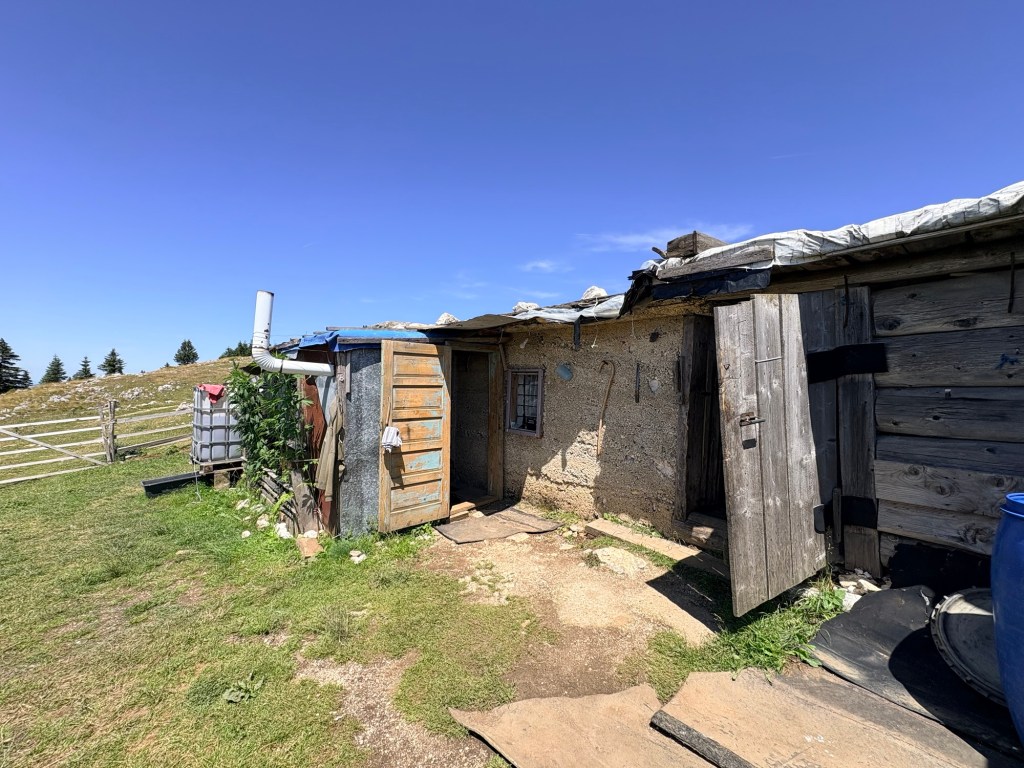
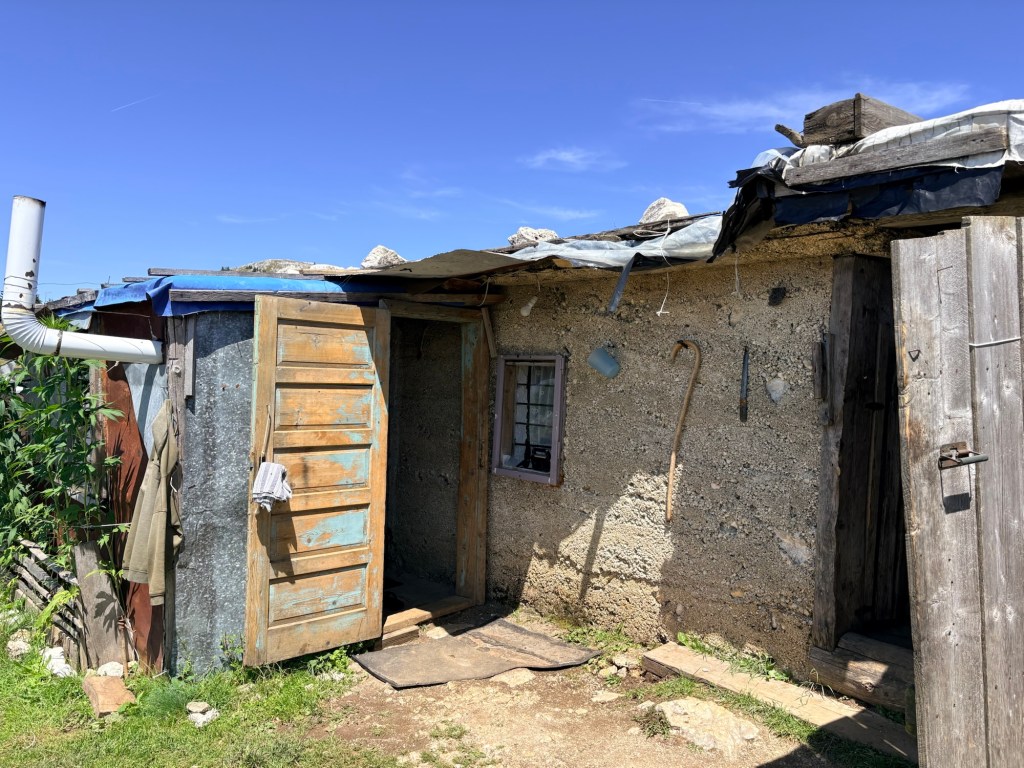
This is where Enes and his family spend much of the year. It sits alone on Vlašić Mountain, surrounded by open fields and grazing sheep. It isn’t a large house, nor has it changed very much over the years. Every part of it exists because it serves a purpose. It is a working home built around life on the mountain.
Inside is where they make cheese from the sheep’s milk.
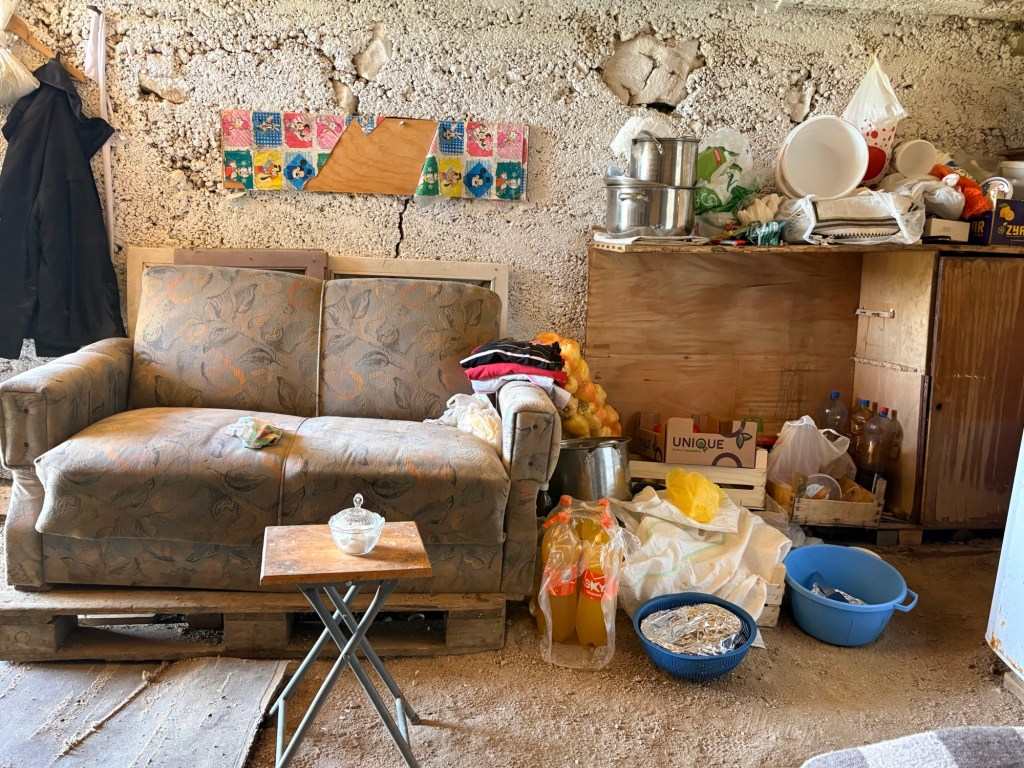
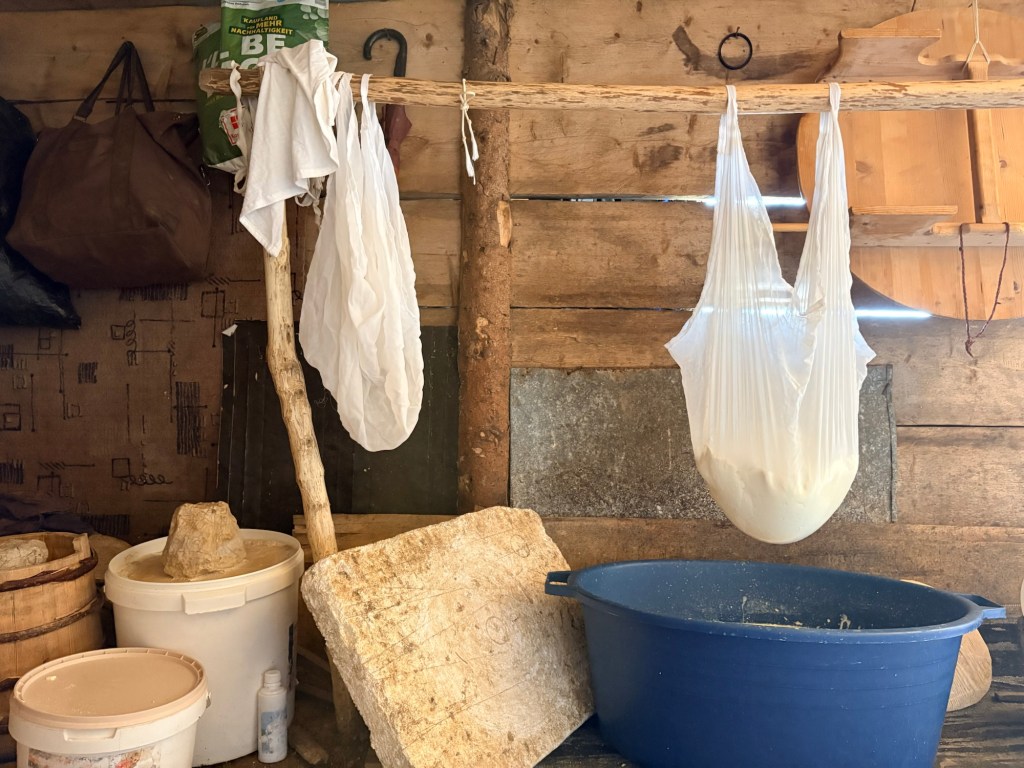
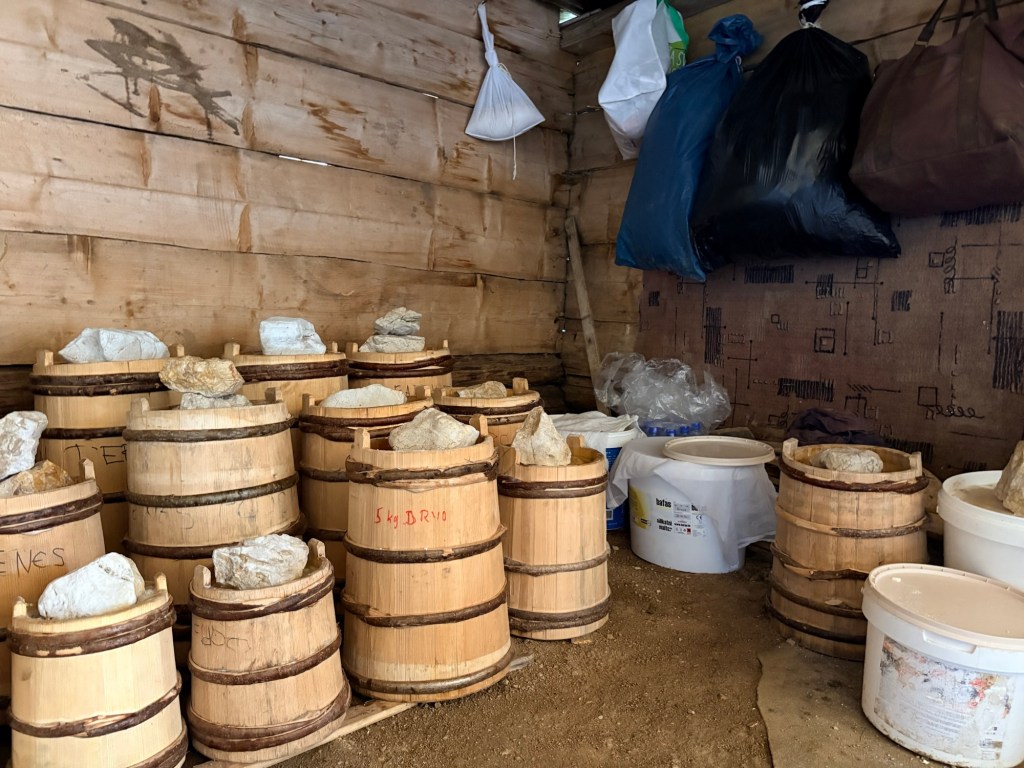
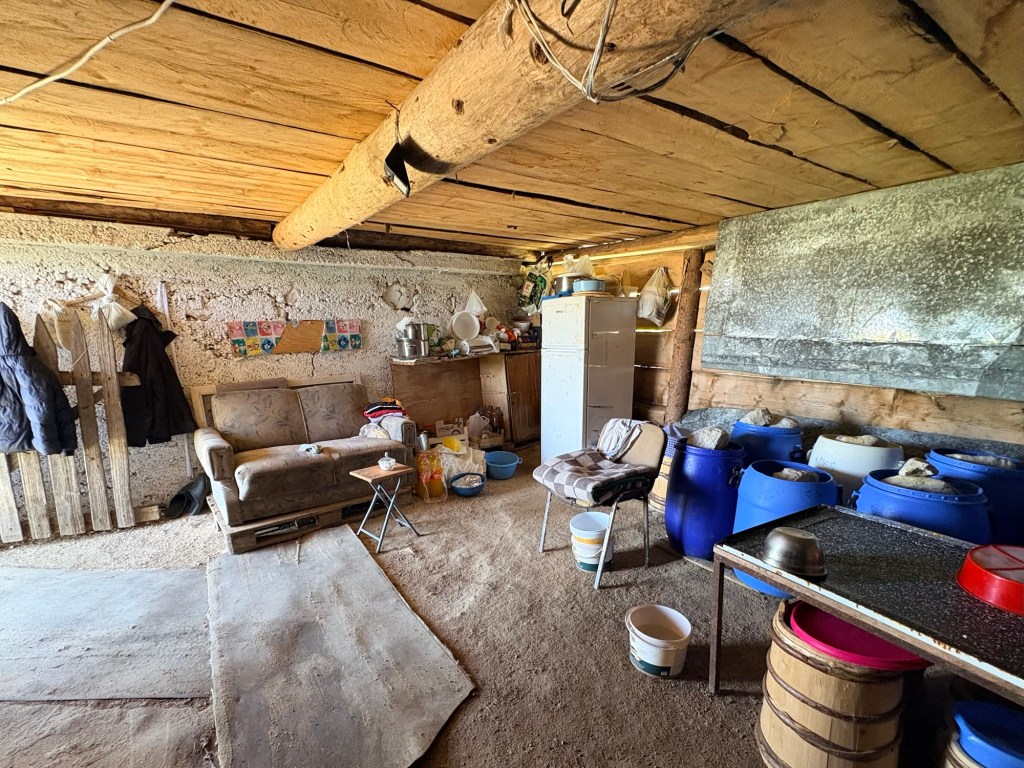
The room is simple. The barrels hold rounds of cheese at different stages of aging, while buckets, tools, and well-used equipment fill the rest of the space. Nothing has been arranged for visitors. This is simply where the family’s work begins each day before the cheese makes its way to homes across the surrounding villages.
Stepping back outside, the house becomes just another part of the landscape. It sits quietly against the hillside, surrounded by open pasture in every direction.
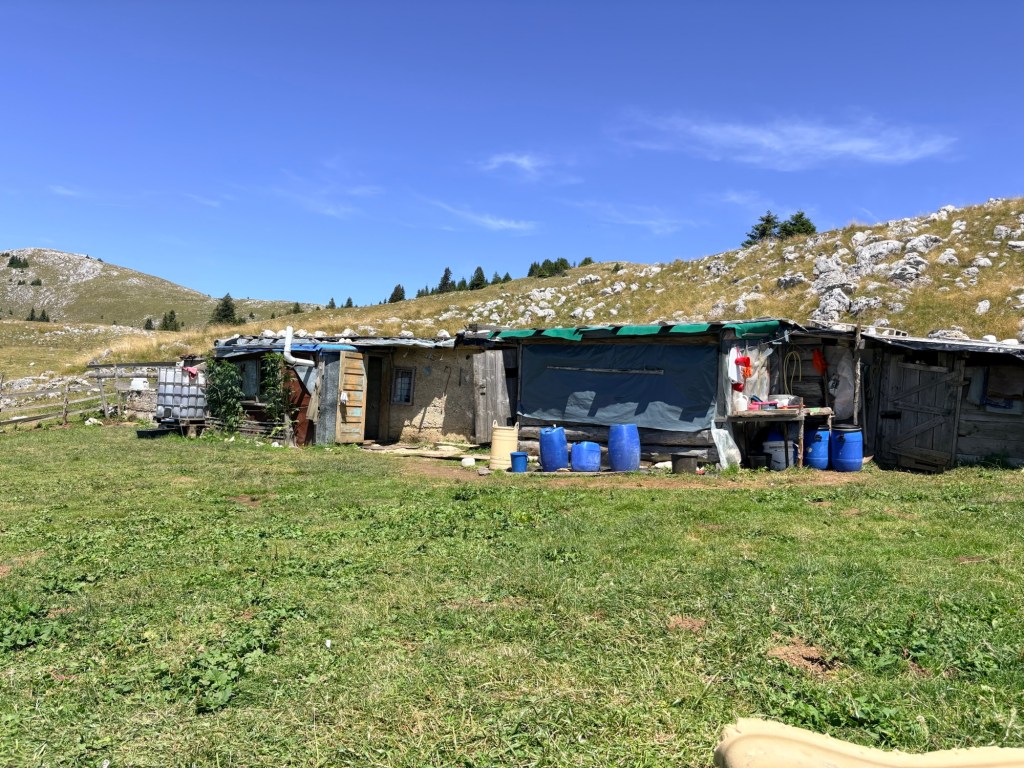
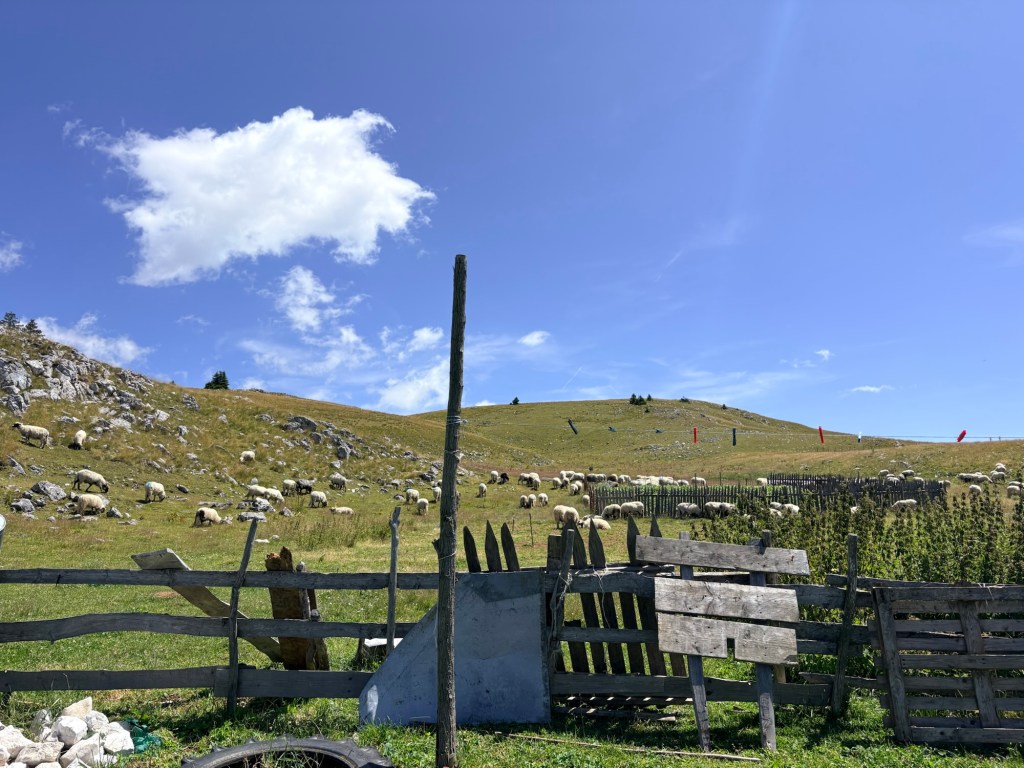
Lots of sheep. They kinda blend into the rocks in this picture haha.
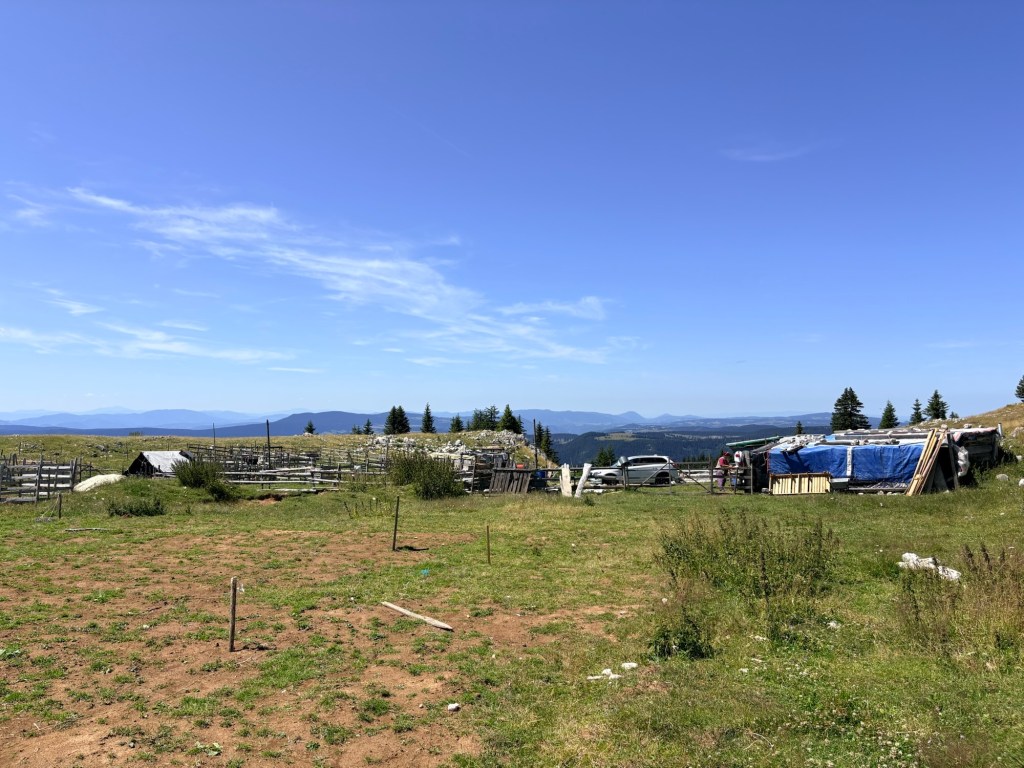
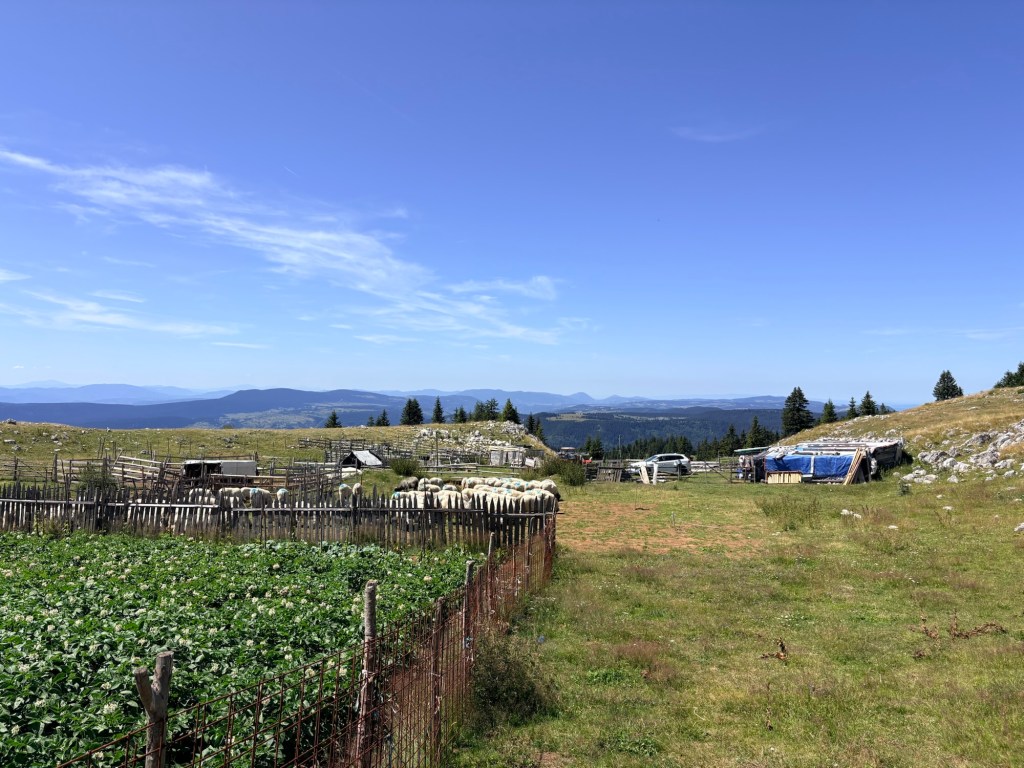
A little farther from the house, the view opens even more.
Every direction stretches into another hill. In the summer, wild thyme grows between the rocks and blueberries cover parts of the mountainside. I wish I could bottle the smell and bring it home with me because no photograph can capture it.
I still remember trying to milk the sheep here when I was little. I wasn’t very good at it, but everyone laughed anyway.
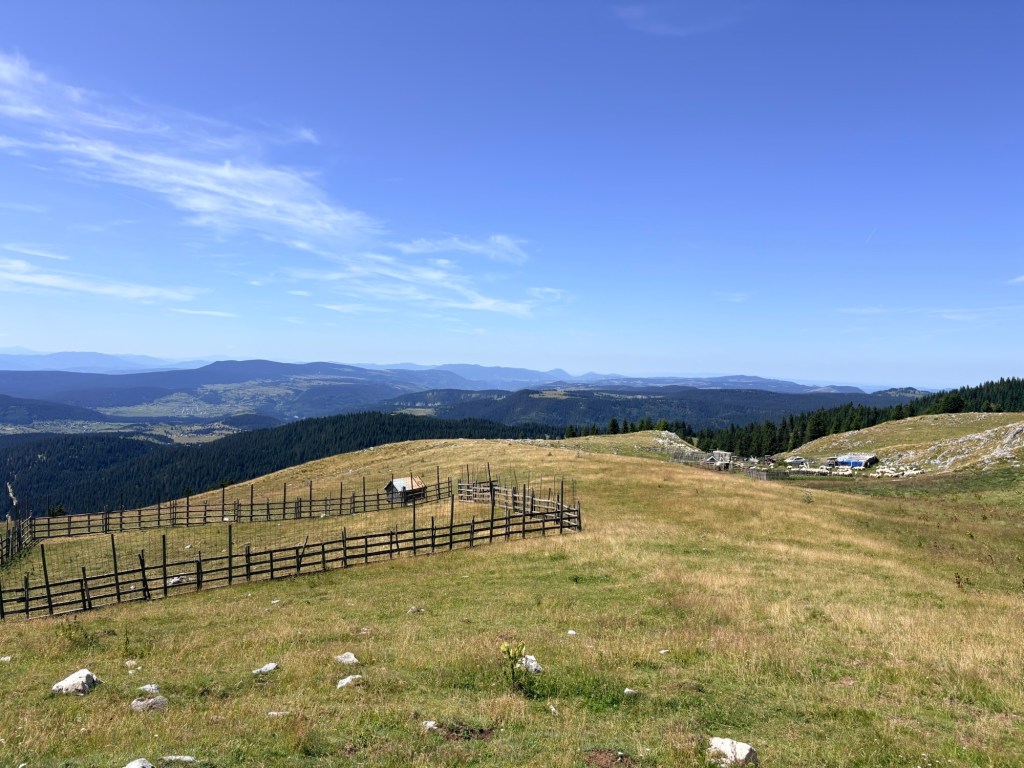
The house is on the far right. The fenced area on the left is where the sheep stay at night. Beside it is a small wooden shelter where Enes sleeps. Wolves and bears still roam these mountains, so someone stays nearby through the night to protect them.
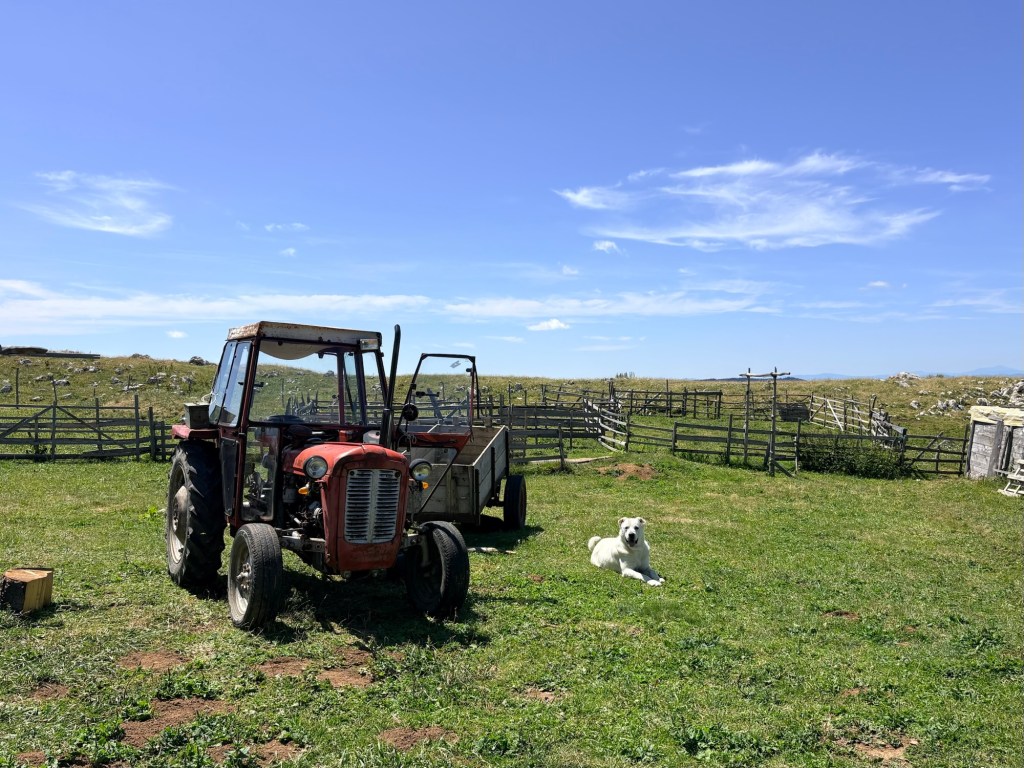
This is one of their dogs.
The dogs spend their days following the sheep across the mountain, but they also seem to take great interest in every visitor who arrives!
…
Understanding the childhood of someone you love is a rare privilege. We know our parents as parents. We hear their stories, look through old photographs, and imagine the places where they grew up. But imagination can only take us so far.
Because of Enes, I didn’t have to imagine.
I was able to better understand my mum.
That experience depended on him. He could have treated us like strangers. He could have preferred that we stayed away, or rent land that belonged to a Bosniak. Instead, every time we visited, he welcomed us without hesitation. He answered every question I asked, showed me around the mountain, and never made me feel like I was standing in someone else’s home.
There is nothing I could ever say that would repay him for that.
He probably thinks he simply rents a piece of land.
I think he gave me the opportunity to know my mother in a way that very few people ever get the chance to know someone they love.
Thank you, Enes.
