There was an afternoon when I thought I was having a bad day as an eleven year old.
We stepped off the overnight bus at the Kalibunar stop in Travnik sometime around five in the morning, each of us dragging oversized duffel bags stiff from the long ride. The sky was already turning pale with sunrise, the kind of sharp white light that forces your eyes half shut after a sleepless night on a bus. I remember shifting the heavy strap of my bag higher onto my shoulder before placing my Mad Libs book on the ground so I could sit on it while we waited for my cousin to pick us up. That was when I noticed the bullet holes.
Not one or two. Entire sprays of them scattered across the side of a concrete building facing the road.
At eleven years old, I still carried Bosnia in the softest possible way. In my mind it was endless green hills, fruit trees, cartoonishly colourful homes, cousins running through fields, the smell of grilled meat drifting through open windows in summer. I had noticed damaged homes before, but only the way children notice things without understanding them. I thought roofs had collapsed from storms. I thought unfinished houses were simply still being built. I never once considered that entire walls had been ripped apart by warfare.
My sister stood beside me while I sat there staring at them, eventually feeling me tug at her sleeve.
“Did we get off at the right spot?”
“Yes.”
“Are we sure?”
“Yes.”
I remember thinking something terrible must have happened since my last visit.
But nothing new had happened at all.
I was simply old enough to finally see it.
Our cousin drove us up toward my grandmother’s village while the morning fog still sat low between the hills. Family members had come from different countries for the summer, and the excitement of everyone arriving filled the house quickly. Shoes piled near the doorway. Blankets and pillows spread across every room. Turkish carpets covering nearly every inch of the floor. The adults spoke loudly over one another while tiny coffee cups clinked against saucers in the kitchen.
Eventually exhaustion won. One by one everyone disappeared to nap after the long journey.
But I could not settle down.
Something about the drive into the village had unsettled me. The bullet holes. The abandoned homes. The strange feeling of realizing a place you love has a history in which you do not understand.
My mother eventually noticed the unrest written all over my face and told me I should go for a walk.
What she did not explain, and what still makes us laugh now, was that in a mountain village you usually need to explain who exactly you are and why you are wandering around alone.
She also forgot to mention that carrying an umbrella through a thunderstorm was an unbelievably stupid idea. I also should have known that myself.
Dark clouds had already started gathering over the hills, but I ignored them completely. Before leaving, I grabbed an umbrella from beside the front door and a pair of binoculars from my cousin’s room. I also stuffed a tiny compact mirror into my pocket before heading outside. The umbrella spent most of the walk being used more as a cane than protection from rain as I skipped along the road, waving awkwardly at strangers staring at me from balconies and gardens.
I walked farther than I meant to.
Eventually I reached the village cemetery overlooking the valley from above. I sat near the stone wall with my cousin’s binoculars balanced in my lap, staring all the way down toward the bottom of the village where my cousin stood waiting exactly where we had planned.
Every few moments I would pull the little compact mirror from my pocket and flash sunlight toward them in quick bursts like some ridiculous homemade lighthouse signal. Then I would lift the binoculars again to see if they noticed.
They did.
I could see them laughing while waving back at me from far below. Then suddenly they started pointing frantically toward the hills behind me.
Dark clouds were rolling in fast.
By the time I started walking back, the first drops of rain had already begun hitting the pavement. Within minutes the road turned slick and dark beneath my shoes. Thunder rolled somewhere above the hills and the rain came down hard enough to blur everything around me.
I started running.
My shoes slapped loudly against the wet concrete while villagers stood beneath covered entrances watching me sprint downhill with an umbrella wobbling uselessly above my head.
One woman shouted after me.
“Who are you?”
Honestly, fair question.
Then a man standing beside a gate stopped me.
He introduced himself as Stipura.
He looked at the umbrella, then looked back at me.
“Do you see anything metal around you?” he asked.
I looked around, confused.
“No.”
Then he pointed toward the umbrella still stretched open above my head, its metal ribs practically begging to be struck by lightning.
Rainwater dripped from my hair while I stood there completely humbled, sputtering through explanations while trying to wipe water from my face. He started laughing. I started laughing too.
Then he invited me into the barn.
Inside, everything smelled like wet hay and animals. Rain hammered loudly against the roof while he carried armfuls of dry hay toward a donkey, a cow, and a pig sheltered inside. Completely soaked through, I sat near the entrance watching him move calmly through the dim barn light as if thunderstorms were nothing worth acknowledging.
At some point I started asking questions.
Questions about the damaged homes.
Questions about the war.
He spoke carefully while feeding the animals, pausing between sentences like he was measuring exactly how much an eleven year old should carry at once. Nothing graphic. Nothing overwhelming. Just enough honesty for me to begin understanding that the village surrounding me had once survived something unimaginable.
I asked him if he knew my mother.
“She grew up in the meadow above your house,” I told him.
“I do know who your mother is,” he said.
Then I asked him why he stopped to help me when I was technically a complete stranger running through the village in a thunderstorm.
He laughed again.
Apparently the villagers had already started theorizing about me before I even reached the cemetery. Either I was some kid visiting family for the summer, or I was helping burglars identify which homes sat empty during the holidays.
Possibly not the greatest first impression on my part.
I returned to visit him constantly that summer. I would wheel barrows full of watermelon rinds, seed husks, and leftover food scraps from my grandmother’s house down to his animals while asking endless questions about the village, the war, and life before my family left Bosnia.
Some afternoons we would sit in the grass beside his fence while the heat settled over the hillside and the village went quiet in that heavy way summer afternoons sometimes do.
That was usually when he would begin speaking about the village itself.
Not only the war, but the life that existed around it.
He described how the sound of music once travelled between the homes when more people still lived there year round. How in the summer nearly everyone would sit outside their houses late into the evening talking across fences and pathways while voices carried through the valley long after dark.
In winter, he said, the whole hillside smelled like wood burning from inside the homes.
Even as a child, I could tell he was not only describing sounds or smells.
He was describing absence.
Over the years he had watched families slowly scatter themselves across different countries until the village became quieter and quieter. Germany. Austria. Sweden. Canada. Entire homes sitting empty most of the year until summer briefly brought them back to life again.
At eleven years old, I did not fully understand diaspora yet.
But I understood enough to realize I belonged to it too.
Looking back now, I think that summer marked the first time I truly understood that my parents existed as people long before they existed as my parents.
I remember returning to my grandmother’s house after one especially long conversation with Stipura and sitting cross legged on the carpet in the living room while everyone watched television together. The room glowed softly from the TV light while my mother sat across from me speaking casually with her siblings, completely composed, completely ordinary.
But I could not stop staring at her.
For the first time in my life, I understood there were entire parts of her I would spend years trying to understand. Histories, fears, memories, losses. An entire life that existed before Canada. Before me.
That realization stayed with me.
And honestly, I am grateful for it.
…
In December of 2024, I walked from my father’s village across the frozen hillside to visit Stipura one last time, although neither of us knew it then.
The village felt smaller than it had when I was a child.
Not physically smaller, but quieter.
Most of the people I once knew there were gone now, scattered across different countries the same way Stipura had once described while we sat beside his fence years earlier. A few homes still had elderly family members living inside them year round, figures occasionally moving behind the curtains, smoke rising from chimneys into the cold air. But many of the houses stood dark and still through winter.
By then, Stipura was one of the only people left in the village who truly belonged to my memories of it.
The walk to his house felt strange in the December cold. The hills that had once seemed enormous as a child now looked softer beneath the snow, the roads quieter without summer voices carrying between the homes.
When I arrived, he greeted me the same way he always had.
Like no time had passed at all.
I would like to respectfully blame the cold December wind for making both our eyes water, but the truth is we cried a little talking about how much life had changed since that summer when I first wandered into his barn.
I thanked him then.
Not just for helping a child during a thunderstorm, but for bridging a gap I did not yet know existed.
Thank you, Stipura.
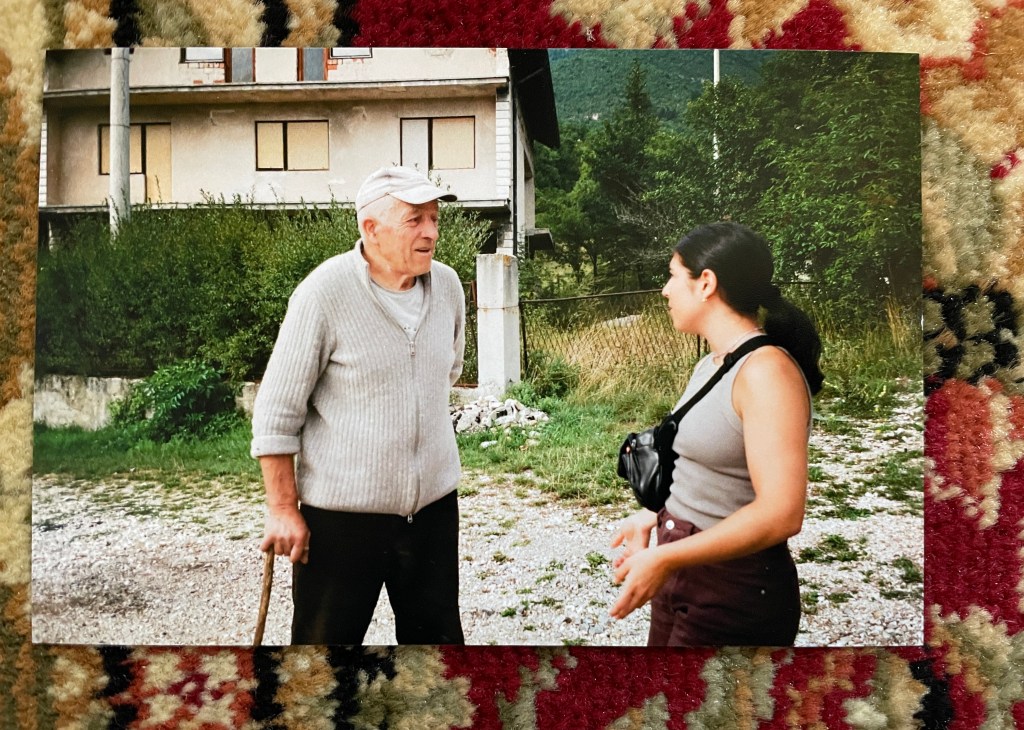
Na Vlakama, Paklarevo, July 2022
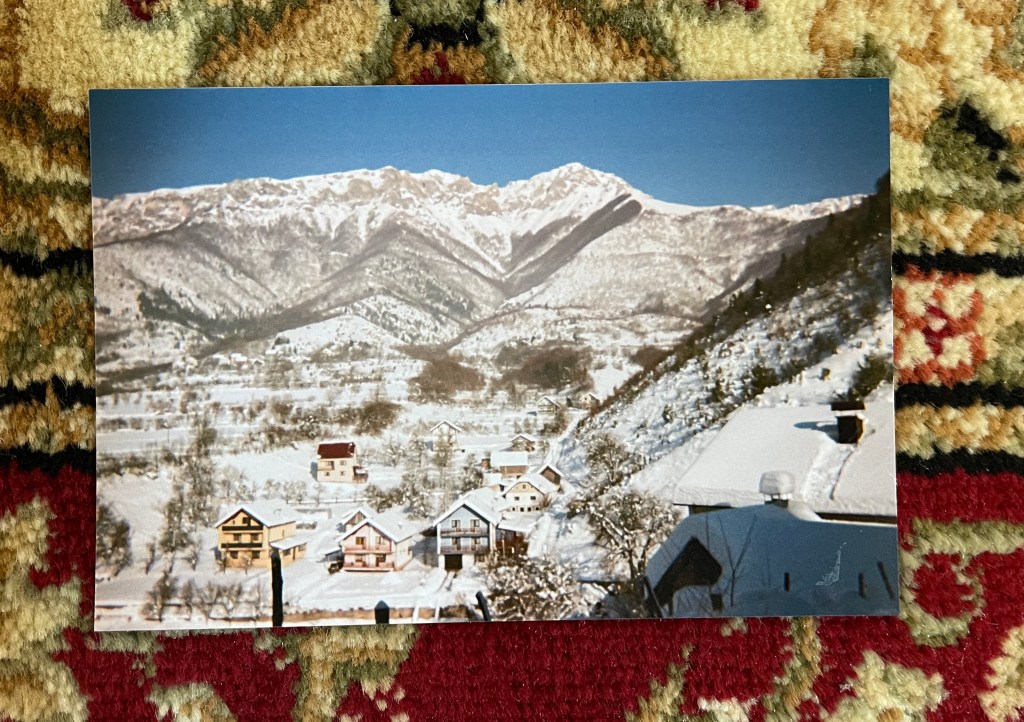
Meljančev Dol, Paklarevo, December 2024
